
The UK agricultural sector relies heavily on temporary and seasonal staff, often described as the unspoken backbone of the country?s food supply chain. From fruit-picking in summer to vegetable harvesting in autumn, temporary workers fill roles that are essential yet increasingly difficult to staff. As the sector faces labour shortages, post-Brexit migration changes and rising production costs, the role of temporary staff has never been more important or more challenging.
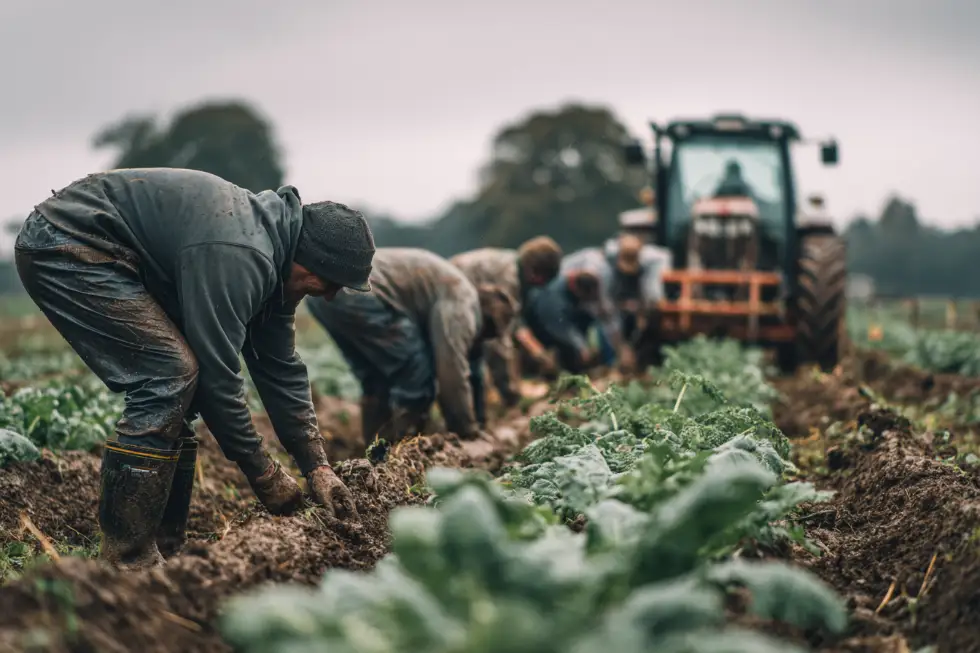
Why Temporary Staff Are Essential in UK Agriculture
1. Seasonal demand
Agriculture is profoundly tied to seasonal cycles. Labour needs peak sharply during planting, harvesting and packing periods. Permanent staff alone cannot meet these surges, making temporary labour indispensable.
2. Labour shortage in rural areas
Many UK farms are located in remote regions where local populations cannot supply the workforce needed. Temporary workers, often from abroad, fill this geographic gap.
3. Specialist skills and productivity
Seasonal workers frequently bring experience from working harvests around Europe. Their speed and precision directly impact crop quality and profitability.
Impact of Post-Brexit Policies
Brexit fundamentally reshaped the agricultural labour market. Freedom of movement ended, and with it, the steady flow of EU workers who previously made up a large percentage of temporary farm staff.
The Seasonal Worker Visa Scheme
The UK introduced the Seasonal Worker Visa, allowing overseas workers to come to the UK for up to six months for horticultural work. While helpful, challenges remain:
- The scheme is limited in numbers, often below what the industry needs.
- Farms face higher recruitment costs and more administrative burden.
- Visa uncertainty makes long-term workforce planning difficult.
Industry groups consistently warn that shortages lead to unharvested crops, financial losses and reduced competitiveness for UK growers.
Economic Importance of Temporary Workers
1. Supporting the UK food supply
Temporary staff ensure timely harvesting, which reduces food waste and keeps shelves stocked. A shortage can disrupt supply chains and increase retail prices.
2. Protecting farms? financial viability
Agriculture operates on tight margins. Missing harvest windows due to labour shortages can mean entire crops are lost.
3. Enabling diversification
Labour-intensive sectors like soft fruit, ornamentals and vegetable production rely on temporary workers to maintain and expand operations.
Challenges Facing Temporary Farm Workers
1. Accommodation and welfare
Many workers live on-site. Quality varies, and maintaining high standards is a recurring industry concern.
2. Physical demands and working conditions
Farm work is intense, weather-dependent and often long-hour. Ensuring safety and fair treatment is central to ethical recruitment.
3. Uncertainty around future labour policy
Workers and employers alike face uncertainty regarding visa quotas, changes in immigration rules and government strategy.
The Future: Mechanisation, Recruitment Innovation and Policy Reform
UK agriculture is exploring solutions to reduce reliance on temporary labour, though none fully replace the workforce.
Mechanisation robotics and software automation
Technologies such as robotic fruit pickers, automated packing lines and precision agriculture tools are developing rapidly. Alongside these physical innovations, software automation is transforming how farms operate. Advanced digital systems now support crop monitoring, yield forecasting, resource planning and logistics, helping farmers make faster and more accurate decisions.
Recruitment software such as Sabre Agri is also becoming increasingly valuable in addressing labour shortages. Our platforms allow farms to streamline hiring, manage applicant data, stay compliant with right-to-work checks and coordinate seasonal workforce planning more efficiently. This helps reduce administrative workload and improve access to suitable labour during peak periods.
While these combined technologies offer significant potential to reduce labour demands and improve productivity, they require major investment and are not yet practical for all crops or farm sizes.
Better domestic recruitment
Efforts include:
- Training schemes for local workers
- Improved wages and working conditions
- Partnerships with colleges and job centres
However, domestic uptake remains low because of the demanding nature of the work.
Policy recommendations
Experts call for:
- A multi-year Seasonal Worker Visa programme
- Higher quotas aligned with industry demand
- Reduced administrative barriers
- Greater support for welfare and training standards
Stable, long-term policy is essential to maintaining food production and supporting farm businesses.
Conclusion
At Sabre MS we recognise that temporary staff are the lifeblood of UK agriculture. Without their contribution, much of the country?s fruit, vegetable and horticultural production simply could not function. As the sector continues to face labour shortages, shifting migration rules and the impact of emerging technologies, the importance of this workforce only grows as does our role in supporting the industry.
We remain committed to ensuring fair treatment, reliable labour supply and the modernisation of agricultural recruitment processes. These priorities will be critical to safeguarding the UK?s food security and strengthening the long-term resilience of the agricultural sector.